Most business websites are not badly designed in the visual sense. They are badly decided. Nobody agreed on who the site is for, what it has to prove, or what a visitor should be able to do in the first thirty seconds. The result looks fine and does very little.
That shows up in ordinary ways. People land on the homepage and leave without going anywhere. The phone rings with questions the site already answers. Quote requests arrive with half the information missing. Sales spends its week repeating what a page should have said once, clearly, in plain language.
Custom web design is how we fix that. Not a template with your logo dropped into it, and not a redesign for the sake of looking current. A site built around the decisions your customers are actually making, and the evidence they need in order to make them.
What we design
This work sits inside our Digital Presence pillar: websites, e-commerce, digital campaigns and social media. In practice that means marketing sites that explain a business properly, storefronts where the path from browsing to checkout is short and obvious, landing pages built for a specific campaign rather than reused from the homepage, and the supporting pieces that keep the whole presence consistent.
Every project starts with structure before surface. Who is arriving, what they already believe, what they need to see, and in what order. Once that is settled, the visual design has something to do besides look pleasant. Typography, spacing, imagery and hierarchy all become decisions with a reason behind them, and they are much easier to defend later when someone asks why a page looks the way it does.
We write and design at the same time. Layout that arrives before copy usually forces the words into boxes they do not fit, and you end up with headlines padded to fill a space. Doing both together keeps the page honest and generally makes it shorter.
How we think about conversion
Conversion is not a button colour. It is whether a visitor can tell, quickly, that you do the thing they need, that you have done it before, and that contacting you is low risk. Most of the lift comes from getting those three things right on the pages people actually land on.
So we spend the time on specifics. Real work instead of stock photography. Plain descriptions of what you do rather than category language. Prices or ranges where you can give them, and an honest explanation of why you cannot where you cannot. Forms that ask for what you genuinely need to respond, and nothing beyond that.
We also design the parts nobody screenshots. Empty states, confirmation screens, the email someone receives after they submit a form, what a page looks like on a five year old phone on a slow connection. Those moments decide whether a first impression survives contact with reality.
Performance, accessibility and search
A design that only works on a fast laptop is not finished. We build responsive layouts from the smallest screen up, keep image weight under control, and avoid the kind of animation that makes a page feel busy without making it clearer.
Accessibility is treated as part of the design rather than a pass at the end. Sensible heading order, real contrast, keyboard reachable controls, descriptive link text, alternative text that describes the image instead of repeating the filename. It is better for everyone and it happens to be what search engines read too.
On the search side we handle the structural work while the site is being built, because retrofitting it is more expensive: one clear H1 per page, unique titles and descriptions, canonical URLs, structured data where it applies, a sitemap, and pages that render server side so a crawler sees the same content a person does.
What you own at the end
You own the design, the code, the domain and the accounts. We hand over a site you can update without calling us, and we walk your team through it before the project closes rather than emailing a document afterwards.
If you want ongoing help we offer care plans for updates, monitoring and small changes. They are optional. A site that can only be maintained by the people who built it is a liability, and we do not build those on purpose.
If you already have a site and the problem is that it stopped working rather than that it does not exist, our website redesign service is the better starting point. The deliverable overlaps, but the first month of work is diagnosis rather than discovery.
If you are a local business and it matters to you that the studio is nearby, our web design in Peterborough page covers how we work with clients here and across the Kawarthas.
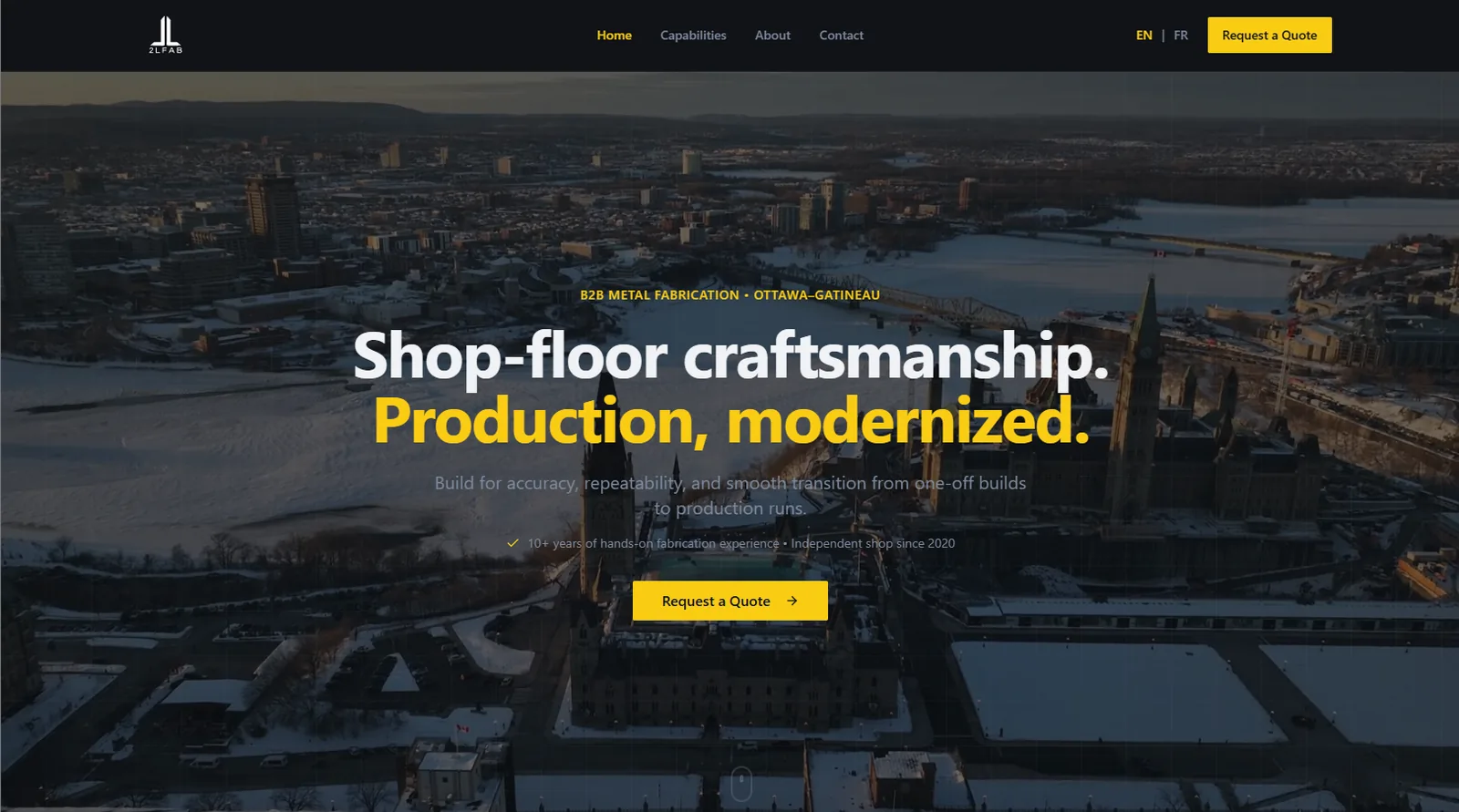
For a real example of what this work changes, read the 2LFAB Inc. case study: a steel fabricator with six years of recurring work and no online presence, and what happened in the eight months after it had one.
Our process
Design projects run through the same five steps as everything else we do. There is no separate design process, because the questions do not change just because the deliverable is a website.
01
Problem
We understand the real problem.
02
Opportunity
We identify what's possible and valuable.
03
Strategy
We define the right solution and roadmap.
04
Build
We design and build with purpose.
05
Measure
We measure what matters and keep improving.
Relevant work
Two projects where the design work was the thing that mattered most.
Steel Fabrication
2LFAB Inc., Ottawa, ON
Past work and quote requests for a growing fabricator
A steel fabricator whose best argument was work they had already finished. The site puts that portfolio first and routes serious visitors into a quote request instead of a generic contact form.
Marketplace Platform
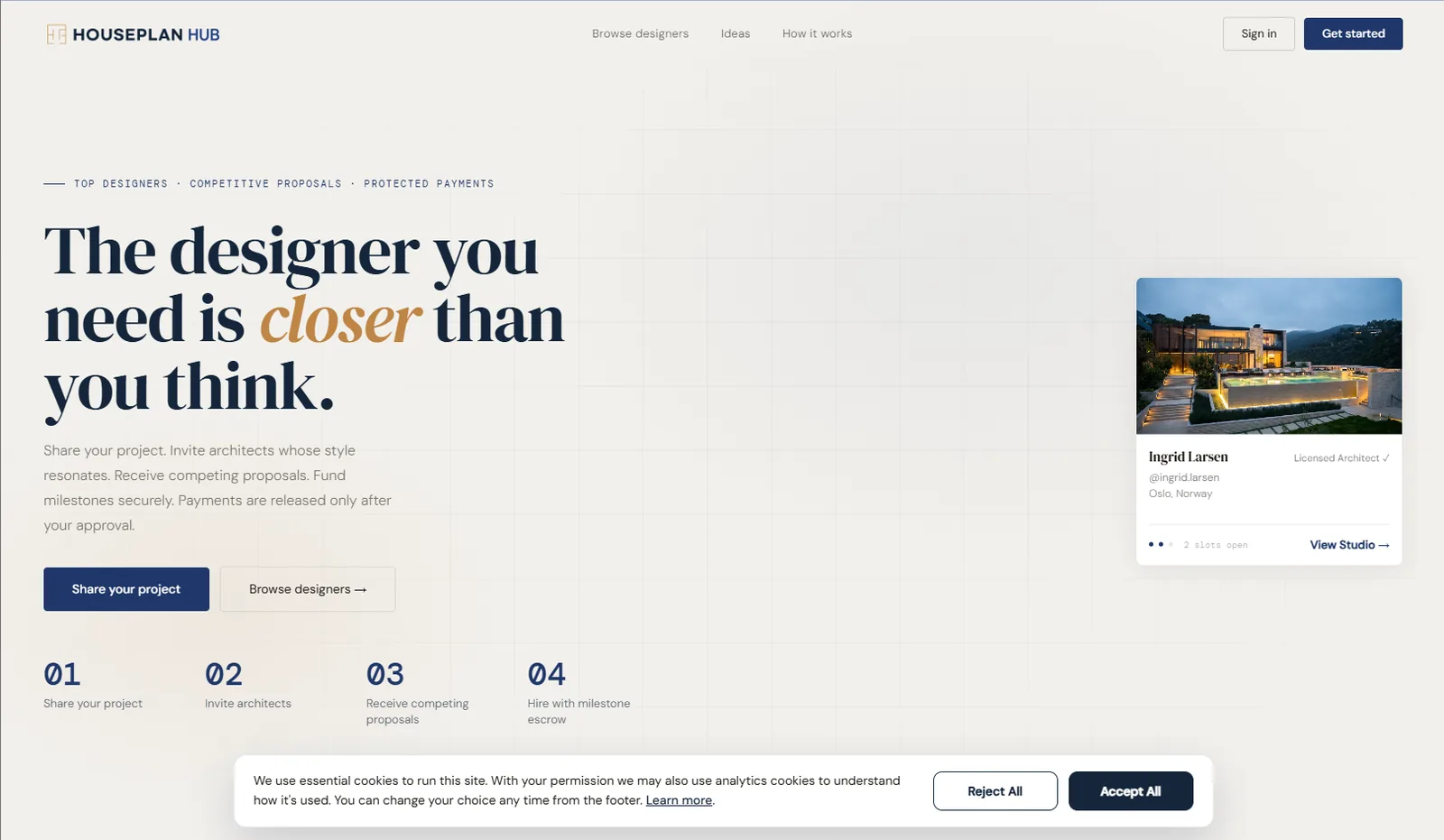
HouseplanHub, Montreal, QC
Homeowners matched with freelance architects
A marketplace with two very different audiences on the same site. Homeowners browsing plans and architects taking on work needed separate paths that still felt like one product.
Questions about web design
Tell us what the site has to accomplish.
Answer a few questions about your business and where you think you are losing people. We will use it to tell you what actually needs designing.